The 27th Conference of the Parties took place in Sharm el Sheikh, Egypt. Dubbed the African COP, it was held on African soil. COP27 focused on shifting pledges to concrete implementation and action under the theme “Together for Implementation”.
The conference focused on key areas and outcomes revolving around:
- Loss and Damage│ seeking to reach a historic agreement to establish a dedicated fund and funding arrangements to support vulnerable developing countries heavily impacted by climate-induced disasters.
- Temperature Goal │ with reaffirmation of the commitment to keep the Paris Agreement’s global warming limit of 1.5 within reach, emphasising that global emissions need to peak before 2025 and drop by 43% by 2030
- Climate adaptation │The COP27 advanced frameworks such as the Glasgow- Sharm el Sheikh work programme to measure and review progress on adaptation goals, alongside increased support for early warning systems.
- Climate Finance │ COP27 addressed the shortfall in previous climate Finance promises, including the delayed USD100 billion annual goal, and pushed for broader financial flows aligned with low-emission and climate-resilient development.
- Emissions and transition│ The COP27 discussed accelerated efforts for reducing emissions, scaling up renewable energy, and transitioning away from fossil fuels, but debates remained intense over coal phase-down language.
OUR WORK AT COP27
Our journey for influence and advocacy for COP27 delivery started in Kigali with our demand for delivering an African People’s COP. In Kigali, Rwanda, on March 5, 2022, we issued a statement presenting African Civil society’s priorities and recommendations ahead of COP27 in Sharm el Sheikh, Egypt.
The statement issued was developed through consultations which involved more than 100 civil society representatives, alongside government, private sector and academic stakeholders. The statement called for COP27 to respond to the real needs and aspirations of African people.
The COP26 had not provided inadequate outcomes as it was expected. From that perspective, our call emphasised the responsibilities of the global North and other major polluters to take the forefront in addressing the climate crisis in line with historical emissions and the principles of Common but Differentiated Responsibilities (CBDR).
Read COP27 Outcome Analysis November 22, 2022
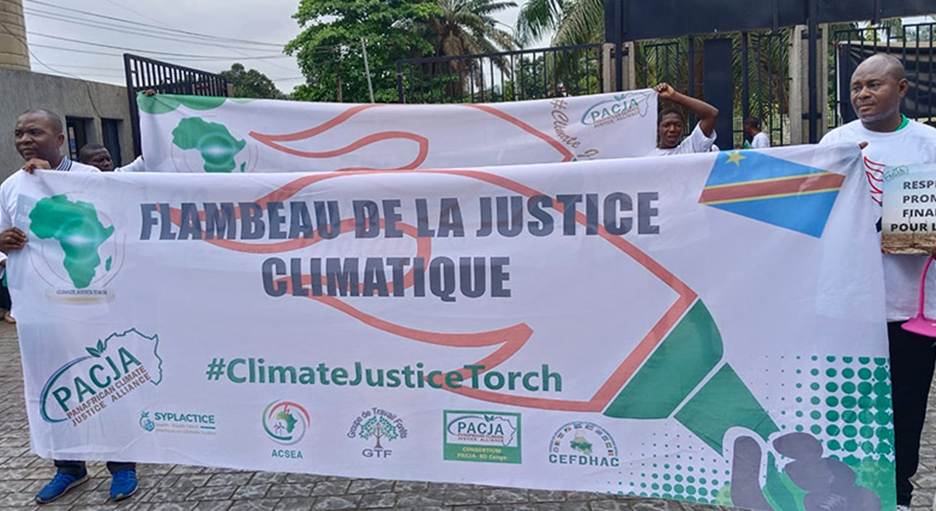
Our work was supported by the continent-wide Climate Justice Torch Campaign. Pan Africa Climate Justice Alliance, partners and like-minded civil society organisations in their own formation, organised the compelling campaign and advocacy ‘Climate Justice Torch ’ to raise awareness about the negative impact of the climate crisis in Africa and increase pressure on global leaders to advance Climate Justice in the context of the African Common Position key demands towards COP27 and beyond.
The African Torch also aimed at enhancing the visibility of African peoples’ affected communities, vulnerabilities and engaging African youth climate activists and contributing to their increased influence at national, regional and international decision-making spaces on climate justice. In this campaign, the torch is used in a symbolic manner. The symbolic torch is used to illuminate and to see in the darkness.