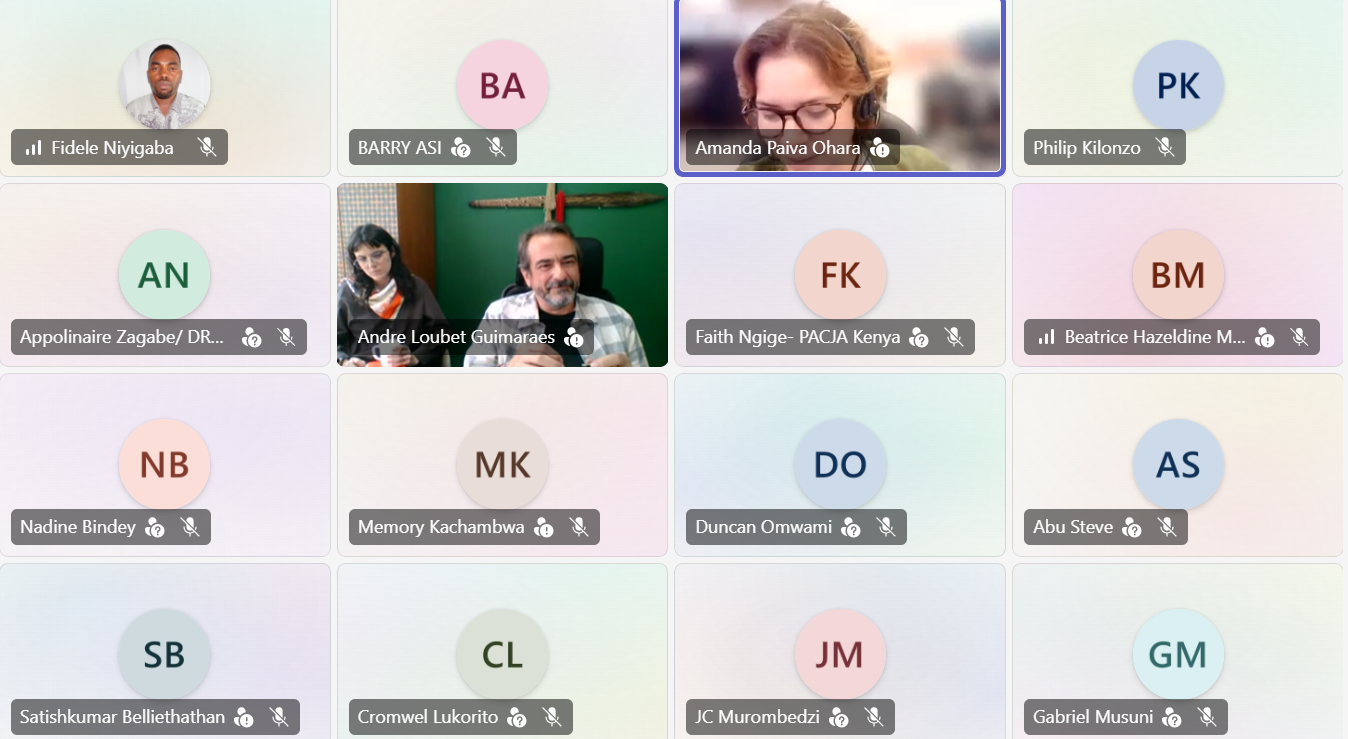
On October 6, 2026, Pan African Climate Justice Alliance (PACJA) and Brazil’s IPAM engaged with the COP30 Presidency on the current status of the Roadmap on Transitioning from Fossil Fuels (TAFF).
The meeting brought together African stakeholders, the IPAM team and the team from the Brasil COP30 Presidency. With the presentation by the team from the COP30 Presidency, the team updated the African stakeholders on the current status of the development of the roadmap for transitioning away from Fossil fuels.
Touching base on various issues, African stakeholders sought clarity on the development and how best I can provide clear direction so that it becomes more effective and inclusive.
With COP31 scheduled for 9–20 November 2026 in Antalya, Türkiye, PACJA sees the period ahead as a critical window for African civil society to consolidate evidence and advocacy positions. The Alliance intends to strengthen its role as an evidence broker, justice standard-setter, accountability actor, coalition builder, policy bridge and narrative shaper connecting international climate processes with the realities of African communities.
The COP30 Presidency Roadmap for Transitioning away from Fossil Fuels (TAFF)?
It’s a non-binding initiative launched by the Brazilian COP30 Presidency to operationalise the 2023 UAE Consensus (from COP28) and translate global net-zero goals into practical, differentiated implementation paths ahead of COP31. The roadmap was announced at the close of COP30 in Belém by the COP30 President, who said he intended to elaborate two roadmaps: one on “transitioning away from fossil fuels in a just, orderly, and equitable manner” and another on “halting and reversing deforestation and forest degradation by 2030”.
The road from Belém to Antalya is intentionally structured as a year-long political and technical process. The COP30 and COP31 Presidencies have convened consultations with negotiating groups, Heads of Delegation and observers and have coordinated with subsidiary-body leadership. This approach is intended to build trust, identify implementation priorities early and reduce the risk that major issues are left unresolved until the final days of COP31.
The COP30 Presidency’s work from Belém to Antalya reflects a fundamental shift in the climate regime. The central question is increasingly how global goals are implemented: how policy signals are translated into national pathways, how finance and technology are mobilised, how countries coordinate without erasing different circumstances, and how progress becomes visible enough to support accountability and course correction.
The fossil-fuel and deforestation roadmaps are therefore more than technical documents. They are tests of whether the international community can operationalise the first Global Stocktake in ways that are politically credible, scientifically grounded and socially just. Their effectiveness will depend on finance, international cooperation, national ownership, transparency, rights protection and continuity beyond the annual COP cycle.
For Africa, the implementation agenda must deliver development-compatible decarbonisation, adaptation at scale, affordable finance, economic diversification, energy access, local value creation and protection of land and community rights. These are not additional considerations to be added after the roadmaps are designed; they are conditions for a transition to be genuinely just, orderly and equitable.
PACJA should use the remaining period before COP31 to convert these principles into specific asks, evidence and accountability tools. The Alliance’s strongest contribution will be to keep implementation connected to people—ensuring that global roadmaps are judged not only by the ambition of their language, but by whether they change finance flows, reduce vulnerability, expand opportunity, protect rights and deliver climate justice on the ground.